Cork hosts TIPS4PED workshop to advance smart, sustainable city planning
December 8, 2025
TIPS4PED consortium meets in Brussels for fourth General Assembly
December 17, 2025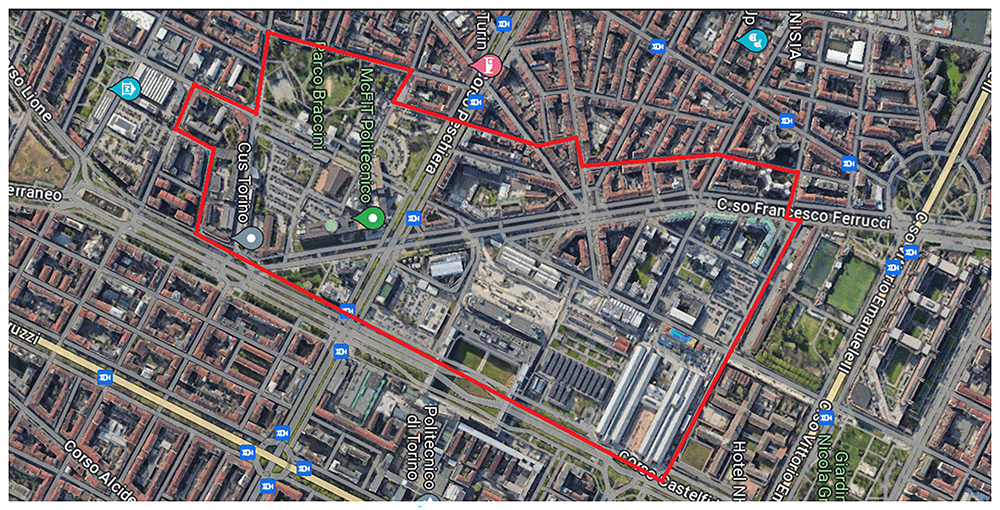
Digital Twins as enablers of Positive Energy Districts: insights from the TIPS4PED project
Positive Energy Districts (PEDs) are emerging as a cornerstone of Europe’s pathway toward climate-neutral cities. Their ambition is clear: to create urban districts that achieve a net positive energy balance while delivering environmental, social, and economic benefits for communities. Yet, despite growing interest and multiple initiatives across Europe, PEDs remain complex to plan and operate. Their systemic, multiscalar, and interdisciplinary nature poses challenges that conventional planning tools struggle to address.
One of the key challenges lies in the lack of integrated methodologies capable of managing the interactions between buildings, energy networks, renewable generation, users, and the wider urban context. Recent international research, including findings from the IEA Energy in Buildings and Communities Programme, highlights digital twinning technologies as promising enablers for PED deployment and optimisation. Digital twins (virtual replicas of physical systems that continuously exchange data) can support integrated design, simulation, monitoring, and adaptive control at district scale. However, their application to PEDs remains limited due to technological, organisational, and institutional barriers.
Within this context, a new open-access scientific publication titled “Digital Twins for Positive Energy Districts: a 10-Step Method for Integrated Design and Optimized Operation” proposes a structured methodology to unlock the potential of digital twins for PEDs. Developed within the framework of the European Commission-funded TIPS4PED project, the study focuses on the Positive Energy District under development at the Politecnico di Torino campus, which serves as a real-world case study.
The proposed methodology introduces a step-by-step digital twinning approach that supports the entire PED lifecycle, from early planning to operational management. It goes beyond purely technical optimisation by integrating technological, spatial, and social dimensions within a single workflow. Crucially, the methodology embeds user experience research (UXR) to ensure that digital twin tools remain accessible, understandable, and useful for diverse stakeholders, including planners, policymakers, energy managers, and other urban actors.
This focus on stakeholder engagement responds to a widely recognised gap in PED development. While technical performance is essential, long-term success also depends on transparency, communication, and acceptance. Digital twins can function not only as analytical tools, but also as interactive platforms for decision-making and reporting, enabling stakeholders to visualise scenarios, understand trade-offs, and engage meaningfully in the PED process.
The Torino case study demonstrates how digital twins can support system design, scenario analysis, real-time control, and performance reporting at district scale. It also illustrates how a structured methodology helps manage complexity, align actors, and bridge the gap between planning and operation, one of the critical challenges facing PED implementation today.
For TIPS4PED, this work provides a replicable methodological foundation to support the wider uptake of digital twins in Positive Energy Districts across Europe. By offering a clear framework that combines technical robustness with stakeholder-centred design, the methodology contributes to more effective, transparent, and scalable PED solutions, supporting Europe’s transition toward climate-neutral and energy-positive urban districts.